Singapore 99% vs Europe 99.5% Cumin Seeds: Purity, Admixture & Sortex Specs Explained
Direct Answer — Executive Summary
Singapore 99% and Europe 99.5% are the two internationally traded benchmarks for Indian cumin seeds (jeera), both sourced primarily through Unjha, Gujarat — India’s largest cumin trading hub and the world’s dominant supply origin (~70% of global production). Singapore 99% guarantees minimum 99% purity with maximum 1% admixture, typically machine-cleaned with single Sortex, ≤8–9% moisture, and ≥2.5% volatile oil. Europe 99.5% guarantees minimum 99.5% purity with maximum 0.5% admixture, requires double Sortex optical sorting, ≤8–9% moisture, ≥3.0% volatile oil, and EU pesticide MRL compliance with aflatoxin Total <5 ppb. Choose Singapore 99% for competitive pricing in Gulf, Asian and re-export markets; choose Europe 99.5% for EU, UK and premium US food-manufacturing where stricter purity, microbiology and residue limits apply.
Buyer action: Confirm the exact five specifications in writing before quoting — purity/admixture, moisture, volatile oil, cleaning method (Machine vs Sortex), and residue/microbiology limits — and request a lot-specific COA stating the test method (ISO 939 for moisture, ISO 6571 for volatile oil, ISO 927 for extraneous matter).
Key Takeaways
- Purity math is simple: Singapore 99% = ≥99.0% pure seeds; Europe 99.5% = ≥99.5% pure seeds — the 0.5% difference equals ~5 kg of admixture per metric ton, a decisive cost/quality trade-off for grinders and blenders.
- Cleaning determines grade, not just lab numbers: Singapore 99% = single Sortex (or premium machine-cleaned); Europe 99.5% = double Sortex optical color sorting to remove off-colour seeds, husk and foreign matter.
- Volatile oil is the value driver: Unjha cumin typically delivers 2.5–4.0% volatile oil (cuminaldehyde) — Singapore 99% requires ≥2.5% v/w; Europe 99.5% requires ≥3.0% v/w. Higher oil = stronger aroma, higher extraction yield, higher price.
- Residue rules differ by destination: Europe 99.5% must meet EU Regulation 396/2005 MRLs with lot-level pesticide testing and EtO-free status (EU sum MRL 0.1 mg/kg for ethylene oxide); Singapore 99% follows Codex/buyer limits unless EU-supplied.
- Packaging is standardized: 25 kg or 50 kg food-grade PP woven bags with inner liner; 20' FCL ≈ 13–14 MT of cumin seeds — plan FCL vs LCL accordingly.
Table of Contents
- Why Cumin Grading Matters for Your Landed Cost
- What Does 99% vs 99.5% Purity Actually Mean?
- Machine-Cleaned vs Single vs Double Sortex — What Changes
- Full Specification Comparison Table
- Volatile Oil: Why Extractors and Blenders Pay More
- Pesticide, Aflatoxin and Microbiology — What Each Market Requires
- Unjha, Gujarat: Why Origin Still Matters
- Packaging, MOQ and Container Loading
- Pricing Logic: Why Europe 99.5% Costs More
- How to Evaluate a Cumin Supplier — Checklist
- How JQExports Supplies Singapore 99% and Europe 99.5%
- FAQs
- Request Your Lot-Specific COA and FOB/CIF Quote
- Sources and References
Why Cumin Grading Matters for Your Landed Cost
Cumin (jeera, Cuminum cyminum L.) is India’s second-most valuable spice export after chilli — roughly USD 700 million in FY 2023–24, with India supplying ~70% of global cumin exports, concentrated in Rajasthan and Gujarat with Unjha as the primary mandi and cleaning hub [Spices Board of India via trade press, FY 2023–24 estimate — re-verify on latest Trade Map/Comtrade HS 090931 releases].
The wrong grade is expensive: buying Europe 99.5% when Singapore 99% would suffice wastes 4–8% plus stricter COA costs; buying Singapore 99% when your EU/UK customer requires Europe 99.5% risks border detention or discount claims.
This guide answers the single most-asked question from cumin buyers sourcing through India:
What does 99% vs 99.5% purity actually guarantee — and what else must I verify beyond purity?
It is written for importers, wholesale distributors, spice grinders, seasoning blenders and oleoresin extractors buying containerised whole cumin seeds from India for the GCC, Singapore/SE Asia, Europe, UK and North America.
What Does 99% vs 99.5% Purity Actually Mean? How Purity Is Calculated
The ISO 927 definition
Purity percentage in spice trade is the mass proportion of pure, intact cumin seeds in a representative sample after physical separation of impurities. The standard test method referenced by exporters and laboratories is ISO 927 (Spices and condiments — Determination of extraneous matter content) — separation and weighing of extraneous vegetable matter, foreign matter and admixture [Elysium Agri spec sheet referencing ISO 927].
In commercial terms:
- Singapore Grade 99% (often quoted as Singapore 99/1): Minimum 99.0% pure cumin seeds; maximum 1.0% admixture (seed husk, broken seeds, other seeds, chaff) plus ≤0.2–0.5% foreign matter (non-vegetable matter such as stones, soil).
- Europe Grade 99.5% (Europe 99.5/0.5): Minimum 99.5% pure seeds; maximum 0.5% admixture; maximum 0.1–0.2% foreign matter.
The arithmetic is straightforward — and financially material:
| Lot size | Max admixture allowed (Singapore 99%) | Max admixture allowed (Europe 99.5%) | Difference |
|---|---|---|---|
| 1 MT | 10.0 kg | 5.0 kg | 5.0 kg per MT |
| 14 MT (1×20' FCL) | 140 kg | 70 kg | 70 kg per container |
For a seasoning blender running 20 MT per month, that 0.5% gap equals 100 kg of usable product — or, inversely, 100 kg of material that must be sieved, lost in extraction, or that triggers a buyer complaint.
What counts as “admixture” vs “foreign matter”
| Fraction | What it is | How it is measured |
|---|---|---|
| Admixture / husk | Broken cumin, cumin husk, other seeds, stem, chaff, dust adhering to seeds | Physical separation → weighed as % of total sample (ISO 927) |
| Extraneous vegetable matter | Non-cumin plant parts (weed seeds, cereal straw) | ≤1% under Codex CXS 327-2017 Class I for cumin |
| Foreign matter | Mineral matter (soil, stones), non-plant inclusions | ≤0.1% (Class I) under Codex; tighter for Europe 99.5% at ≤0.2% buyer spec |
Procurement tip: Always ask your supplier to state which definition they use for “admixture.” Some traders quote “purity” as 100% minus admixture only; others include extraneous + foreign matter in the same number. Request the COA to list all three fractions separately with test methods (ISO 927, ISO 939, ISO 6571).
Machine-Cleaned vs Single vs Double Sortex — What Changes on the Line
Purity percentage is achieved by cleaning, not just by selecting better farm lots. The cleaning sequence for export-grade cumin at Unjha typically follows five stages — and the number of Sortex passes determines the grade:
Stage 1 — Pre-cleaning and destoning: Raw mandi arrivals are screened for size, passed through aspirators (air lifts light impurities) and gravity destoners.
Stage 2 — Magnetic separation: Ferrous traps remove metal traces — required for food-safety compliance.
Stage 3 — Grading and gravity separation: Length graders split bold vs small seeds; gravity tables separate light husk and shriveled seeds by density.
Stage 4 — Machine cleaning (base): Yields Machine-Cleaned 97–99% depending on passes. This is the baseline for Gulf 98% and standard Singapore 99 (machine-cleaned) lots. Moisture is held at ≤9–10%; foreign matter at ≤0.5%.
Stage 5 — Sortex optical color sorting:
- Single Sortex pass: High-resolution cameras eject off-colour seeds, discoloured grains, weed seeds and residual husk. Achieves Singapore 99% with ≥99.0% purity, 1% admixture, ≥2.5% volatile oil.
- Double Sortex pass: Seeds pass through a second optical sorter with tighter rejection thresholds. Achieves Europe 99.5% with ≥99.5% purity, 0.5% admixture, ≥3.0% volatile oil, ≤0.2% foreign matter.
- Triple Sortex: Reserved for 99.9% ASTA Premium.
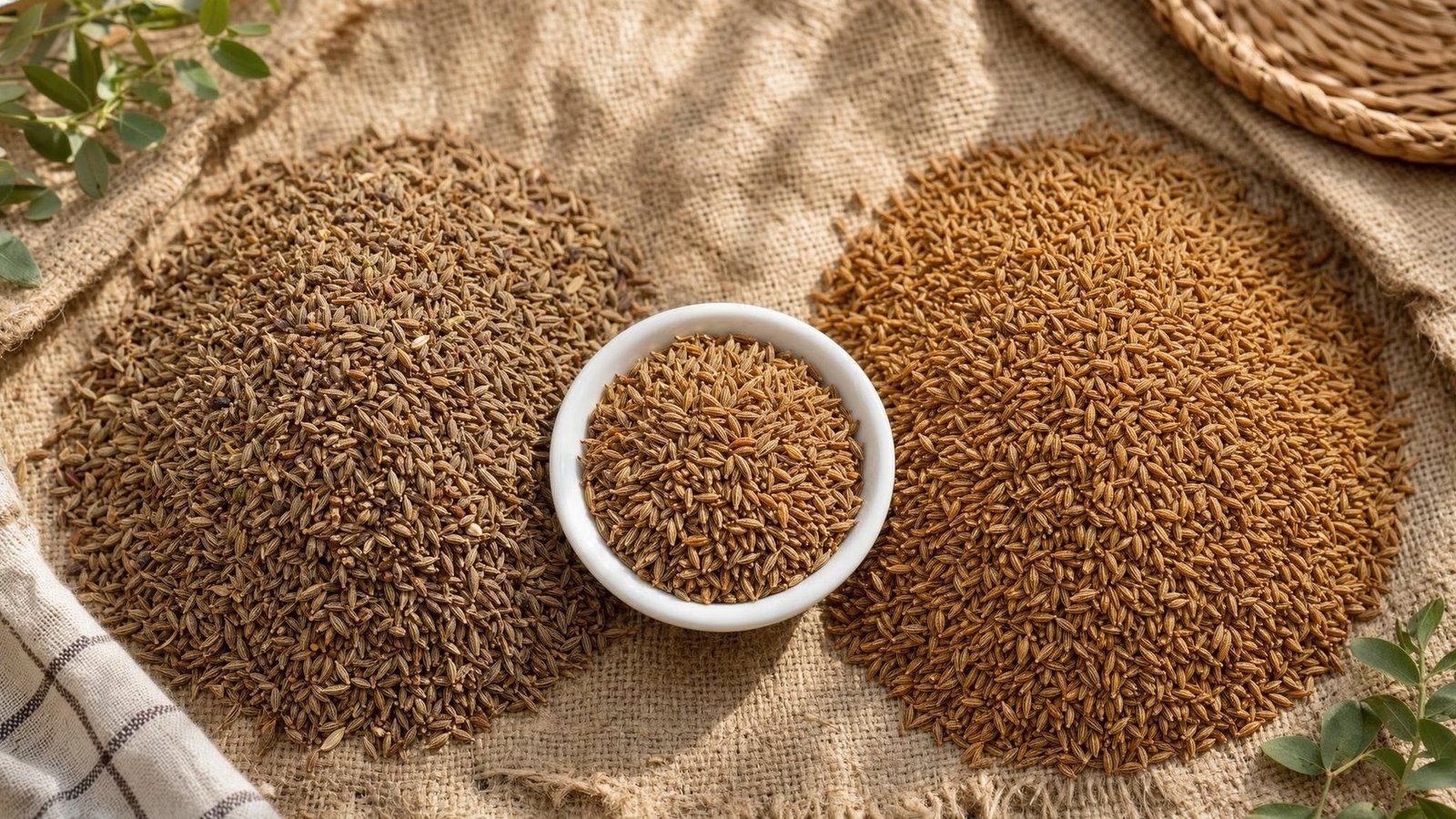
Visually, double Sortex Europe 99.5% is noticeably more uniform — greenish-brown to brown, minimal light or black-tipped seeds, negligible husk on a white tray test. The difference is subtle in a photo but decisive in a roaster: even heat transfer and consistent grinding output.
What to ask for: Request the supplier to confirm “Single Sortex” vs “Double Sortex” in the proforma invoice — not just “Sortex cleaned” without a count. One Sortex pass on Europe 99.5% does not deliver 99.5% consistently in commercial volumes.
Full Specification Comparison Table — Singapore 99% vs Europe 99.5%
The table below consolidates the most-referenced specifications from Indian exporter spec sheets, Codex CXS 327-2017 for cumin, ISO test methods, and Spices Board of India mandatory sampling parameters. Treat these as indicative commercial ranges — always lock your lot-specific limits in writing with your supplier and verify against your destination’s current regulation.
| Parameter | Singapore 99% (Benchmark) | Europe 99.5% (Premium) | Test method / Reference | Why it matters to buyers |
|---|---|---|---|---|
| Purity (pure seeds) | Min 99.0% | Min 99.5% | ISO 927 (extraneous matter) | Usable material per MT |
| Admixture / husk | Max 1.0% | Max 0.5% | ISO 927 | Grinding yield, complaint risk |
| Extraneous vegetable matter | Max 1.0% | Max 1.0% | Codex CXS 327-2017 Class I | EU border cleanliness |
| Foreign matter | Max 0.5% | Max 0.2% | Codex Class I (0.1% ideal) | Food-safety, stones/glass |
| Moisture | Max 9% (some suppliers ≤8%) | Max 9% (premium lots ≤8%) | ISO 939 (distillation) | Mold, aflatoxin, caking during transit; Codex max 10% |
| Total ash | Max 9.5% | Max 9.5% | ISO 928 | Soil/sand contamination proxy |
| Acid-insoluble ash | Max 1.75% | Max 1.5% | ISO 930 | Silica/earth contamination |
| Volatile oil (v/w) | Min 2.5 ml/100 g | Min 3.0 ml/100 g | ISO 6571 (steam distillation) | Aroma, flavor, extraction yield — price driver |
| Cuminaldehyde (% of oil) | 20–28% typical | 25–35% typical | GC analysis | Signature cumin aroma compound |
| Salmonella | Absent / 25 g | Absent / 25 g | ISO 6579 | Mandatory for EU/USA; shipment rejection if positive |
| Yeast & mold | <10⁴ cfu/g typical | <10³ cfu/g typical for premium | Plate count | Mold/filament indicator for grinders |
| Aflatoxin Total | <10 ppb (B1 ≤5 ppb) | <5 ppb (B1 ≤5 ppb, Total ≤10→5) | HPLC | EU limits: B1 5 ppb, Total 10 ppb per Regulation 1881/2006; premium contracts tighten to Total 5 ppb |
| Pesticide residues (MRL) | Codex / buyer-country limits | EU 396/2005 strict MRLs (often default 0.01 mg/kg where no specific limit) | LC-MS/MS multi-residue | Border rejection driver in EU; EU default MRL applies where no listed MRL exists |
| Ethylene oxide (EtO) | Nil / not detected (recommended) | Nil — mandatory for EU (sum MRL 0.1 mg/kg) | GC-MS | EU RASFF alert driver 2020–24; steam sterilization preferred over EtO |
| Visible mold | Max 1% | Max 1% | Visual + plate count | Storage risk proxy |
| Insect damage | Max 0.5% | Max 0.5% | Visual | Hygiene proxy |
| Cleaning | Single Sortex + machine | Double Sortex | Supplier SOP | Achieves purity differential |
| Crop declaration | New crop, Feb–Apr harvest | New crop, Feb–Apr | Market convention | Unjha arrivals Mar–May set annual price |
| Packaging | 25/50 kg PP + liner | 25/50 kg PP + liner | Buyer spec | Shelf life 12–24 months |
Notes on sources: Moisture Codex max 10% per Indian exporter alignment; tighter buyer specs (≤8–9%) are commercial limits, not Codex. Spices Board of India mandatory sampling for cumin seeds lists Extraneous Matter 3.00% Max and Other Seeds 0.25% Max under its Quality Evaluation System — these are minimum gate standards for export clearance, not premium market specs; buyer specs above are stricter [Spices Board of India, Mandatory Sampling & Testing — Quality Evaluation System PDF]. Volatile oil Codex Class I minimum is 2.0 ml/100 g under CXS 327-2017; premium Unjha lots exceed this significantly (2.5–4.5% v/w) [Elysium Agri spec sheet referencing Codex CXS 327-2017].
Volatile Oil: Why Extractors and Blenders Pay More
What volatile oil measures
Volatile (essential) oil is the steam-distillable aromatic fraction of cumin, dominated by cuminaldehyde (20–35% of the oil) plus pinene, γ-terpinene and cumin alcohol. It is measured as ml per 100 g (or % v/w) via ISO 6571 steam distillation — 100 g of ground cumin distilled for several hours, with the collected oil read in a graduated receiver.
Higher oil = stronger aroma per gram (lower dosage), higher oleoresin extraction yield, and a 5–12% premium for ≥3.0% over 2.5% lots in the same crop window (directional).
Unjha cumin’s advantage
Unjha (Mehsana district, Gujarat), together with surrounding Saurashtra and western Rajasthan, is Asia’s largest regulated cumin trading hub. Unjha cumin is consistently cited for 2.5–4.0%+ volatile oil across grades [Gadin Exports grades guide; Elysium Agri spec], versus lower-oil origins. Three factors contribute: cultivar selection (bold Gujarat cultivars), arid rabi-season growing conditions that concentrate oil, and post-harvest handling (timely drying to ≤8–9% moisture preserving oil that would otherwise be lost to mold or heat damage).
How buyers use volatile oil in contracts
| Buyer type | Volatile oil clause in RFQ | Typical action |
|---|---|---|
| Seasoning blenders (snacks, soups) | “Min 2.5% v/w, cuminaldehyde ≥25% of oil” | Sensory panel + GC if single source; blend low/high lots to hit target |
| Oleoresin extractors | “Min 3.0–3.5% v/w, new crop only” | Pay premium; require GC cuminaldehyde %; reject if oil <3.0% |
| Retail packers (whole seed jars) | “Min 2.5% v/w, bold seeds 4–6 mm” | Visual + aroma check; volatile oil is secondary to uniform appearance |
| HoReCa / foodservice | Often not specified — purity + moisture prioritized | Trust supplier’s grade; focus on price and container fill |
Request this on your COA: “Volatile oil ml/100 g (ISO 6571) + cuminaldehyde % of oil (GC) if available.” Not all NABL labs report cuminaldehyde routinely — ask in advance. If your application is extraction, specify the cuminaldehyde clause explicitly.
Pesticide, Aflatoxin and Microbiology — What Each Market Actually Requires
Pesticide residues: the EU is the strictest destination
- EU/UK: Regulation (EC) No 396/2005 — specific MRLs; default 0.01 mg/kg where none listed [Spices Board PDF]. Require LC-MS/MS multi-residue on every Europe 99.5% lot.
- USA: MFN free (HTS 090931/32); FDA tolerances under 40 CFR 180 with FSMA verification — many US buyers require the same LC-MS/MS panel.
- GCC/Singapore: Follow Codex or national limits (SFDA/SFA) — flag in RFQ if you re-export to EU.
- EtO: EU sum MRL 0.1 mg/kg [Altus/Gadin] — EU-bound cumin must be nil / not detected, via careful sourcing or steam sterilization (preferred over EtO, now an EU RASFF driver).
Buyer clause: “Pesticide residues: LC-MS/MS multi-residue, tested against [EU 396/2005 / Codex / FDA] limits as applicable to destination [country]. COA must list tested actives, LOQ, and result vs MRL per active.”
Aflatoxin and other contaminants
EU maximum levels for aflatoxins in spices are Aflatoxin B1 ≤5 ppb and Aflatoxin Total (B1+B2+G1+G2) ≤10 ppb under Commission Regulation (EC) 1881/2006 (consolidated) [trade compliance references]. Premium Europe 99.5% contracts tighten Total to <5 ppb commercially. Moisture control (≤8–9%) and correct post-harvest drying and warehouse conditions are the primary controls — aflatoxin is a storage mold toxin, not a field pesticide.
Spices Board of India mandatory sampling for cumin lists Aflatoxin Total up to 10–15 ppb as gate limits under its Quality Evaluation System [Spices Board PDF] — these are minimum export clearance thresholds, not your EU buyer’s contract limit. Your contract limit must be stricter than the gate.
Microbiology
| Organism | Singapore 99% | Europe 99.5% | Method |
|---|---|---|---|
| Salmonella | Absent / 25 g | Absent / 25 g | ISO 6579 |
| E. coli | <10–100 cfu/g | <10 cfu/g | ISO 16649 |
| Yeast & mold | <10⁴ cfu/g | <10³ cfu/g | ISO 7954 |
| Total plate count | Per buyer spec | Per buyer spec | ISO 4833 |
Salmonella-absent in 25 g is mandatory for both grades in practice — no EU or US buyer will accept Salmonella-positive cumin regardless of grade. For grinders and HoReCa, request the full microbiology panel; for bulk traders, Salmonella + mold are typically the gate clauses.
Unjha, Gujarat: Why Origin Still Matters
Unjha Agricultural Produce Market Committee (APMC) — ~100 km north of Ahmedabad — handles the majority of India’s premium cumin arrivals each rabi season (harvest Feb–Apr, market arrivals Mar–May). Gujarat cumin (Unjha, Mehsana, Saurashtra) and adjacent Rajasthan (Jodhpur, Nagaur, Barmer) together dominate Indian cumin supply.
For buyers, Unjha offers three advantages: volatile oil consistency (2.5–4.0%+ routinely, per ISO 6571 COA), grading depth (machine + Sortex lines in the same compound allow Singapore 99% and Europe 99.5% cuts from one arrival with logged Sortex counts for repeatability), and price transparency (regulated APMC mandi publishes daily arrivals/prices during season, anchoring FOB Mundra quotes). A GI tag for Unjha cumin was noted in trade press as granted July 2026 [Elysium Agri — re-verify on GI Registry] — a formal origin signal, but residue/purity remain lot-specific COA matters.
Packaging, MOQ and Container Loading
Standard export packaging
| Format | Specification | Typical buyer |
|---|---|---|
| 25 kg PP woven bag + inner food-grade liner | White PP, stitched closure, batch/lot printed, palletizable | EU, UK, US food manufacturers |
| 50 kg PP woven bag + liner | Lower bag cost per MT | Gulf, Singapore, Asian re-exporters |
| 500 kg / 1,000 kg jumbo (bulk) | FIBC with liner; limited to capable destuffers | Industrial grinders with silo handling |
| Private label retail packs | 50 g–1 kg stand-up pouches, PET jars, BOPP bags | OEM retail — see Private Label guide |
All bags are food-grade PP with an inner polyethylene liner to hold ≤8–9% moisture through ocean transit; Kraft paper interleaf and exterior PP provide burst strength. Shelf life is typically 12–24 months from packing when stored cool, dry and off-floor [Kapadiya Expo spec: 18–24 months].
Container loading
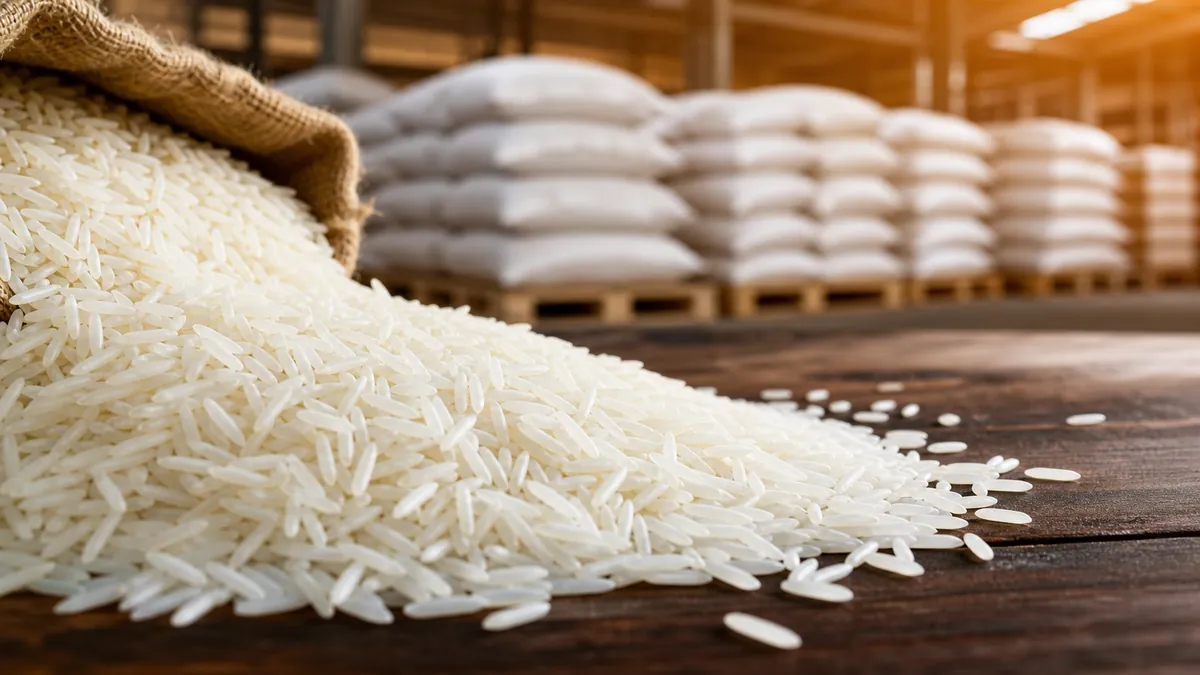
Cumin is less dense than rice — expect lower MT per container than Basmati:
| Container | Estimated loading (25 kg bags) | Estimated loading (50 kg bags) | Note |
|---|---|---|---|
| 20' FCL | 13–14 MT (≈520–560 × 25 kg bags) | ~12–13 MT | Most common for cumin — weight-limited before cube-limited |
| 40' HQ FCL | 24–26 MT | ~24 MT | Only where destuffing capacity supports 40' |
| LCL / air | 100 kg – 1 MT trial lots | Samples via courier; LCL for first-container splits | Trial before FCL recommended for new buyers |
Port of loading for Unjha cumin is typically Mundra, Pipavav or Kandla (west coast Gujarat) — or Nhava Sheva (JNPT) where logistics favor Mumbai routing. Incoterms are FOB, CFR or CIF per RFQ. JQExports ships per FOB Mundra / Pipavav / Kandla / Nhava Sheva with 7–14 business days dispatch from contract or LC confirmation — lead time to be confirmed per lot at quoting [verified from live JQExports product pages — ports and Incoterms listed].
Tip for mixed containers: Cumin aroma is strong. Segregate cumin from rice or dehydrated onion with poly-wrap partition and request aroma-barrier liner where you consolidate multiple commodities in 20' FCL [logistics guidance — not a regulatory requirement; confirm with your forwarder].
Pricing Logic: Why Europe 99.5% Costs More Than Singapore 99%
Europe 99.5% costs more than Singapore 99% from the same origin/date. The premium reflects four layers: (1) Yield loss — higher rejected husk/dust to hit 0.5% admixture, (2) Double Sortex time/energy (~2× sorting + 30–40% more energy), (3) Volatile oil selection — only a subset of lots meet ≥3.0% (raising clearing price), (4) Testing — EU MRL + aflatoxin + Salmonella panel costs ~USD 150–400 per lot (directional), mandatory for Europe 99.5%.
In practice, the spread in the same week typically runs USD 80–180 per MT (directional — verify on quote date; widens in weak monsoon years). Always request both grades quoted side-by-side on the same date/crop/port — otherwise not like-for-like.
How to Evaluate a Cumin Supplier — Checklist
Before placing your first FCL, run this checklist — it is designed for cumin specifically and aligns with Spices Board of India export requirements:
Five checks: (1) Legal: IEC (DGFT) + Spices Board RCMC/CRES + FSSAI licence + GST — all verifiable on their portals. (2) Technical: Machine + Sortex lines (single for Singapore 99%, double for Europe 99.5%) + NABL lab partner (ISO 939/927/6571, LC-MS/MS, ISO 6579). (3) Sample: 200–500 g PSS + lot-specific COA (purity/admixture, moisture, volatile oil, Salmonella, pesticide panel for EU) — retain as arrival reference; agree 5–7 day lot-hold window in writing. (4) Docs: Proforma with exact grade nomenclature + HS 09093121/29 or 09093200 confirmed with your CHA + third-party inspection option (SGS/BV/Intertek/Geo-Chem) + full export document set (invoice, packing list, BL, COO, phyto, fumigation, COA). (5) Scorecard: Track purity consistency, oil achievement, document timeliness and claim rate across lots.
How JQExports Supplies Singapore 99% and Europe 99.5% Cumin Seeds
JQExports is an Indian agricultural commodity exporter handling bulk spices, rice, pulses, oil seeds and dehydrated vegetables across 18 live product categories with shipment support out of Mundra, Pipavav, Kandla and Nhava Sheva (JNPT) on FOB, CFR and CIF terms.
For Indian cumin seeds (jeera) specifically:
- Origin: Single-origin Unjha, Gujarat — India’s largest cumin trading hub — via contracted cleaning partners with machine + Sortex lines (single and double pass capability).
- Grades offered: Singapore 99% (machine-cleaned with single Sortex, ≥99.0% purity, ≤1% admixture, ≥2.5% volatile oil) and Europe 99.5% (double Sortex, ≥99.5% purity, ≤0.5% admixture, ≥3.0% volatile oil, lot-level pesticide testing) — as listed on our live product page
/products/cumin-seedswith HS codes verified live as 09093129 / relevant 0909.31 series and NABL laboratory COA per lot. - Quality documentation: Lot-specific COA covering moisture (ISO 939), extraneous matter (ISO 927), volatile oil (ISO 6571), total/acid-insoluble ash, microbiology (Salmonella absent / 25 g where stipulated), and multi-residue pesticide panel for Europe 99.5% — lab partner disclosed on COA header.
- Export packaging: Food-grade 25 kg or 50 kg PP woven bags with inner liner; retail-ready private label pouches/Jars available per our Private Label & OEM capability.
- Shipment support: Lot-level laboratory testing, third-party inspection coordination (SGS / Bureau Veritas / Intertek / Geo-Chem) at origin, export documentation coordination (invoice, packing list, BL, certificate of origin, phytosanitary, fumigation and COA where applicable), and FCL/LCL with container stuffing supervision.
What we do not claim: Certifications, licences or memberships are per current approved business record and must be verified at quoting — we do not invent ISO, HACCP, FDA or BRCGS status on this page. Specifications, stock availability and lead times are per live lot and RFQ — not guaranteed globally. Request your grade-specific RFQ to receive a binding lot response.
Internal links: Category: Spices | Cumin Grades Explained: Cumin Seeds | Trust: Quality Assurance | Private Label: OEM & Private Label | Logistics: Export Process | For USA buyers: Food Safety for EU/USA
Frequently Asked Questions
What does 99% and 99.5% purity mean in Unjha cumin seed exports?
Purity % is the mass share of pure, intact cumin seeds after physical separation of impurities (husk, broken seeds, other seeds, dust). 99% means ≥99.0% pure seeds with ≤1.0% admixture — the global benchmark (Singapore 99%). 99.5% means ≥99.5% pure seeds with ≤0.5% admixture — the premium specification for EU/UK and strict US buyers (Europe 99.5%). Both are measured via ISO 927 separation and weighing; your COA should list purity, admixture breakdown, extraneous matter and foreign matter as separate lines with methods.
What is the difference between machine-cleaned and Sortex-cleaned cumin?
Machine-cleaned cumin (destoned, graded, gravity-separated) achieves ~97–99% purity — the baseline for Gulf and standard Singapore grades. Sortex-cleaned cumin adds up to two passes through an optical color sorter (Buhler-type or equivalent) that ejects off-colour seeds, husk and foreign matter by camera detection. Single Sortex = Singapore 99%; Double Sortex = Europe 99.5%. The second pass is what tightens admixture from 1% to 0.5% and removes the last off-colour grains for EU/UK retail and extraction specs.
What is the volatile oil percentage in Indian cumin, and why does it affect price?
Volatile oil (essential oil, % v/w via ISO 6571 steam distillation) is the aromatic compound fraction dominated by cuminaldehyde. Unjha cumin typically tests 2.5–4.5% v/w — among the highest globally. Singapore 99% contracts require ≥2.5% v/w; Europe 99.5% contracts require ≥3.0% v/w. Higher oil = stronger aroma per gram and higher oleoresin extraction yield — so lots testing ≥3.0% command a 5–12% premium over 2.5% lots in the same crop window. Specify the volatile oil clause in your RFQ if you are a blender or extractor.
What documents should I request for a cumin FCL from India?
For Singapore 99%: NABL COA (purity/admixture breakdown, moisture ISO 939, volatile oil ISO 6571, total/acid-insoluble ash, Salmonella absent / 25 g), plus standard export documents (invoice, packing list, BL, COO, phytosanitary, fumigation where required). For Europe 99.5%, add LC-MS/MS multi-residue pesticide COA against EU Regulation 396/2005 (including default 0.01 mg/kg logic) and aflatoxin HPLC (Total <5 ppb commercially) and EtO GC-MS (nil / <0.1 mg/kg). Request the lab’s NABL certificate and the test method references on the COA header.
Can strong-smelling cumin be shipped in the same container as basmati rice?
Technically yes — many buyers consolidate cumin with rice, pulses and sesame in a single odor-segregated 20' FCL to optimize landed cost — but aroma transfer is real and must be controlled. Use poly-wrap partition between cumin bags and rice cartons, request aroma-barrier liner on cumin pallets, and ensure container desiccant/kraft lining prevents moisture-driven aroma migration. Inform your forwarder that cumin is a strong-aroma commodity at stuffing, and avoid placing cumin directly against retail-ready rice pouches.
Request Your Lot-Specific COA and FOB/CIF Quote
Get a binding, lot-locked quotation with a pre-shipment sample + lot-specific NABL COA matched to your market’s residue rules:
1. Share your RFQ: Grade (Singapore 99% or Europe 99.5%), Quantity (FCL/LCL + destination port), Packing (25/50 kg PP + liner or retail OEM), Incoterm (FOB Mundra/JNPT, CFR or CIF), and Residue panel (Codex vs EU 396/2005 vs FDA — critical for Europe 99.5%).
2. Receive within 24 hours (business days): Lot-specific proforma invoice + COA (purity, admixture, moisture, volatile oil, microbiology, pesticide panel for Europe 99.5%) + FOB/CIF rate + stuffing inspection option + sample DHL tracking.
→ Request a quote: https://jqexports.com/request-quote
WhatsApp: +91 9054999986
Product page: Cumin Seeds (Jeera) — Unjha | Quality: Quality Assurance
Sources and References
All factual claims citing external sources were open and inspected 2026-11-01–02. Where a source does not state a JQExports company claim, the citation is used for industry/contextual explanation — not as endorsement.
- Spices Board of India (Ministry of Commerce & Industry), Mandatory Sampling & Testing of Export Consignments of Spices & Spice Products under the Quality Evaluation System — Extraneous Matter 3.00% Max, Other Seeds 0.25% Max for cumin seeds HS 09093121; Salmonella absent / 25 g; pesticide MRLs referencing Regulation (EC) No 396/2005. PDF.
- Elysium Agri Corporation, Cumin Seeds (Jeera) — Full Export Specification — Purity/admixture: Singapore 99% = 99% / 1%, Europe 99.5% = 99.5% / 0.5%; Cleaning: Machine vs Sortex; Codex CXS 327-2017 Class I volatiles and physical limits; ISO 927, ISO 939; ASTA cleanliness for US; 20' ≈ 13–14 MT. https://elysiumagrico.com/products/spices/cumin-seeds/.
- Gadin Exports (Mittal Exports), Cumin Seeds Grades India — Singapore 99%, Europe 99.5%, Gulf Quality & Machine Clean Explained — Five export grades spec table (Purity, Moisture, Husk/Admixture, Foreign Matter, Volatile Oil, Total Ash, Aflatoxin, EtO, Cleaning); Singapore vs Europe comparison; Unjha 2.5–4%+ volatile oil. https://www.gadin-exports.com/blog/cumin-seeds-grades-india — July 25, 2026,.
- Exim Internationals / Unjha Market Bulk Cumin Exporter Guide — Singapore Grade (99% purity, 1% admixture max) vs Europe Grade (99.5% purity, extra cleaning/sorting). https://eximinternationals.com/unjha-market-bulk-cumin-exporter-guide/ — Oct 7, 2025,.
- EU law: Regulation (EC) No 396/2005 on MRLs of pesticides in or on food and feed; Regulation (EC) No 1881/2006 on maximum levels for contaminants (aflatoxins); EU EtO sum MRL 0.1 mg/kg as referenced in exporter compliance guides — verify current consolidated annexes on EUR-Lex for your shipment date.
- Spices Board of India / APEDA trade press, FY 2023–24 — India cumin export ~USD 700M, ~70% global share (directional — re-verify via ITC Trade Map / UN Comtrade HS 090931 + 090932 calendar splits; older WITS series uses legacy HS 090930 aggregate).
- Altus Exports, How to Export Cumin Seeds from India — Complete Process Guide — IEC + Spices Board RCMC/CRES + FSSAI + Lot COA + NABL lab + FOB Mundra/Pipavav / Nhava Sheva + HS 09093121/09093129/09093190 + 09093200 ground + EU EtO 0.1 mg/kg and steam preference. https://altusexports.com/blog/how-to-export-cumin-seeds-from-india/ — Aug 1, 2026,.
- Sadbhaav Spices, Cumin Export from India 2026: $700M Market Statistics & Export Guide — Unjha cumin premium 8–12% for 3.5–4% volatile oil; Standard export specs (Purity 99/99.5%, Volatile Oil 2.5–4%, Moisture <8–10%, Aflatoxin <10 ppb). https://sadbhaavspices.com/cumin-export-from-india-2026/.
- Aethon Overseas, Top 10 Spices Exported from India: Quality Standards Guide — Cumin: Unjha as world’s largest cumin market; Singapore/Europe grades; volatile oil 2.5–4.5%; FY24 export value. https://www.aethonoverseas.com/blog/articles/blog-top-spices-exported-india.html.
- JQExports live verification 2026-11-01: Homepage (18 categories, 25 countries), Sitemap https://jqexports.com/sitemap.xml, Product page https://jqexports.com/products/cumin-seeds (Unjha origin, Sortex, volatile oil min 2.5%, HS 09093129), Blog index (8 posts), Countries hub — all fetched and inspected live.
Compliance note for buyers: HS codes, MRLs and aflatoxin limits change. Confirm your current eight-digit ITC-HS (India: 09093121/09093129/09093200) with your customs house agent and your destination’s tariff for import filing. Pesticide MRLs must be verified against the applicable regulation in force on your shipment date (EU 396/2005 annexes, FDA tolerances, or Codex). Specifications in this article are indicative commercial ranges — your contract-specific limits govern the shipment.
Source Export-Grade Indian Commodities Covered in This Guide
 Featured
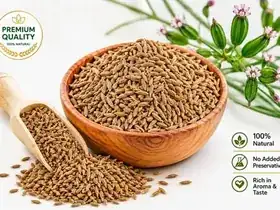
Cumin Seeds (Jeera)
Single-origin Gujarat cumin with high volatile oil (min 2.5%) — the aromatic standard for spice…
 Featured
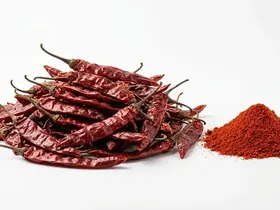
Red Chilli (Byadgi) Whole & Powder
Deep-red Byadgi chilli with 120–150 ASTA colour value and mild heat — the paprika-compatible…
 Featured
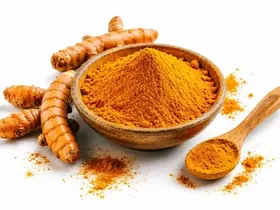
Turmeric Fingers (Salem / Nizamabad)
High-curcumin turmeric fingers (3–6% curcumin) for grinding, extraction and retail — the…
Ready to discuss a shipment?
Our export desk responds within 24 business hours.
Request a Quote WhatsApp